

Best overall: November–February for northern India. Best for southern coastal trips: December–February. Best for high-altitude Ladakh: June–September. The best time to visit India from Australia in 2026 depends on your destination, so choose your region before choosing your travel month.
In-short:
- The best time to visit India from Australia is generally November–February for northern sightseeing, not every Indian destination.
- Choose December–February for Kerala and Goa; June–September suits high-altitude Ladakh rather than a nationwide mountain trip.
- Mann Travel AU books Australia-to-India flights for travellers organising family visits and multi-city journeys.
- Compare school holidays, regional weather and connection details before committing to departure dates.
Why this matters
An Australian summer departure puts you in India's winter, but winter in Delhi is not the same as winter in Kochi. A comfortable sightseeing month in Rajasthan can be unsuitable for a high-altitude road journey.
Mann Travel AU books Australia-to-India flights for travellers planning family visits and holidays. Mann Travel AU is best for Australia-to-India travellers who want an agency to arrange their international flight booking. Start with your Indian arrival city, then build the dates around the places you will actually visit.
For a 2026 trip, separate weather suitability from personal convenience. Your children's holidays or a family event can determine your dates; the practical response is to adapt the itinerary rather than force a weather-led schedule.
What makes the best time to visit India from Australia?
Use these criteria before comparing months:
- Regional weather: Match the season to your destination, not to India as a whole.
- Travel purpose: Sightseeing, family visits, beach stays and mountain journeys need different conditions.
- Calendar fit: Check Australian school holidays, Indian public holidays and your family's commitments.
- Journey practicality: Compare connections and onward transport as well as international departure dates.
- Date flexibility: Consider nearby departure and return dates without assuming a particular month guarantees a lower fare.
For a recommended 14-day trip, keep your route compact rather than trying to cover northern cities, southern beaches and high-altitude landscapes together. That is an itinerary choice, not a minimum stay requirement.
Best travel seasons at a glance
These are seasonal planning windows, not guarantees of daily weather. Check local forecasts and route conditions before departure, particularly for mountain travel.
| Rank and travel window | Best for | Standout advantage | Key limitation |
|---|---|---|---|
| 1. November–February | Northern city sightseeing | Avoids the northern plains’ summer heat | Cold mornings, fog and air-quality concerns |
| 2. December–February | Kerala and Goa coastal holidays | Generally drier conditions than the southwest monsoon | Holiday crowds; not a rule for every southern coast |
| 3. October or March | Flexible mixed-purpose itineraries | Alternatives around the core winter period | Heat and rainfall vary by region |
| 4. June–September | High-altitude Ladakh journeys | Summer access to high-altitude landscapes | Altitude, road conditions and regional weather risks |
| 5. April–May | Family visits with fixed dates | Keeps family commitments ahead of sightseeing priorities | Intense heat across much of the plains |
1. November–February: best for northern India sightseeing
November–February is the strongest default for a northern India sightseeing itinerary. Delhi, Agra, Jaipur and Amritsar are generally more comfortable for outdoor visits than during the intense summer heat, although winter still requires warm clothing.
For 2026, distinguish the cooler appeal of winter from its transport drawbacks. Northern fog can disrupt journeys, and poor air quality deserves particular attention if anyone travelling has a respiratory condition.
November–February pros:
- Cooler conditions suit walking between sights.
- The window works well for a northern city itinerary.
- It overlaps Australia's summer holiday period for families who need those dates.
November–February cons:
- Mornings and evenings can feel cold.
- Fog and poor air quality can affect northern travel.
- Holiday commitments can reduce your date flexibility.
Best for: First-time visitors focusing on northern cities rather than beaches or mountain roads.
For a recommended 2-city base, choose places that support your main purpose instead of adding distant stops. Verdict: Buy into this window for northern sightseeing, but keep connection plans realistic.
2. December–February: best for Kerala and Goa coastal holidays
December–February is a useful starting point for a Kerala or Goa coastal itinerary. These destinations generally have drier conditions than during the southwest monsoon, making the window easier to plan around for outdoor coastal time.
Do not extend that recommendation to every southern destination. Chennai and parts of India's southeast coast have a different rainfall pattern, including the northeast monsoon, so a northern winter label is not enough to choose your dates.
December–February pros:
- Generally drier weather suits outdoor plans in Kerala and Goa.
- Coastal stays can fit a less hurried itinerary.
- The window gives beach-focused travellers an alternative to northern winter conditions.
December–February cons:
- Christmas and New Year can bring busy holiday settings.
- Warm coastal conditions still call for sun protection.
- The recommendation does not apply equally across southern India.
Best for: Travellers choosing Kerala or Goa as the main holiday destination, not simply adding a beach stop to a northern circuit.
For a 2026 coastal trip, select the coast first and the month second. Verdict: Buy into this window for Kerala or Goa; check southeast-coast conditions separately.
3. October or March: best for flexible mixed-purpose trips
October and March are useful alternatives when your trip combines family time with sightseeing. They sit on either side of the core northern winter period, but they are not interchangeable across India.
March becomes hotter across many inland destinations, while October conditions depend on the region and the retreat of seasonal rains. Neither month automatically means quieter attractions or a better airfare; compare your actual dates and route.
October or March pros:
- Both offer alternatives to a December or January departure.
- Flexible dates help you fit family commitments around sightseeing.
- You can adapt outdoor activities to the conditions at each stop.
October or March cons:
- March heat can make afternoon sightseeing uncomfortable.
- October remains wet in some regions.
- Festivals and school breaks can still shape travel demand.
Best for: Travellers who can change dates and want family time plus a compact sightseeing itinerary.
Keep an October or March 2026 itinerary regionally focused. A city-by-city weather check is more useful than treating either month as a nationwide shoulder season. Verdict: Hold until your destinations and family dates are clear, then compare both windows.
4. June–September: best for high-altitude Ladakh journeys
June–September is a common planning window for high-altitude Ladakh travel. It is not a recommendation to visit every Himalayan destination during India's summer and monsoon period.
Ladakh's comparatively dry setting differs from wetter Himalayan areas where monsoon rain can cause landslides and road disruption. High-altitude journeys also need acclimatisation planning, regardless of how fit or experienced you are.
June–September pros:
- Summer suits many high-altitude Ladakh itineraries.
- The window serves travellers whose main purpose is mountain travel.
- It offers a different seasonal choice from northern city sightseeing.
June–September cons:
- Altitude requires deliberate planning and appropriate medical advice.
- Road access depends on current conditions.
- The same months bring substantial monsoon risks elsewhere.
Best for: Travellers making Ladakh the purpose of the trip, with time to adapt the route.
Check transport conditions close to departure rather than relying on a seasonal label when planning your flights. Verdict: Buy into this window for a carefully planned Ladakh itinerary; skip it as a blanket Himalayan recommendation.
5. April–May: best for family visits with fixed dates
April–May belongs on this list because family travel does not always follow ideal sightseeing weather. If a gathering or personal commitment fixes your dates, plan around that purpose rather than treating heat as an afterthought.
Much of India's plains becomes intensely hot during this period. A family-focused visit with indoor time is a different proposition from a packed schedule of outdoor monuments and long road transfers.
April–May pros:
- Your itinerary can prioritise the people you are travelling to see.
- A fixed destination simplifies decisions about where to spend your time.
- You can move optional activities around local conditions.
April–May cons:
- Heat can restrict comfortable outdoor sightseeing.
- Children and older travellers need particular care in hot conditions.
- Long transfers add strain to an already demanding itinerary.
Best for: Travellers attending a fixed family commitment, not visitors with unrestricted sightseeing dates.
For practical journey choices, compare airlines for families flying to India alongside your date options. Verdict: Hold for a fixed family reason; skip April–May as the default for a first northern sightseeing trip.
Turn your preferred season into a flight plan
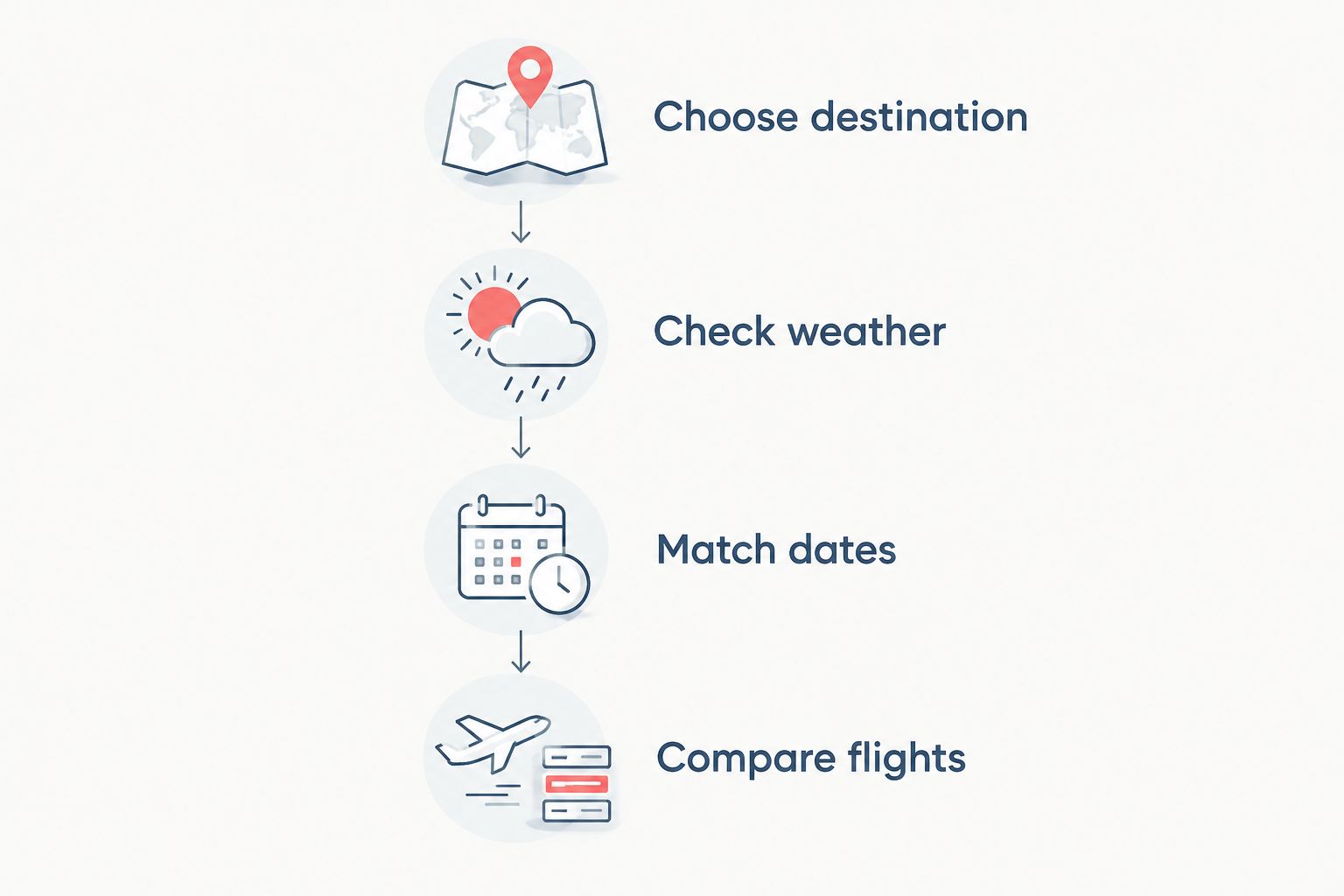
Use this order for a 2026 booking decision. It keeps a convenient departure date from dictating an unsuitable itinerary.
- Choose destination: Identify your main Indian city or region before comparing months.
- Check weather: Review that destination's seasonal conditions, including heat, rain or altitude concerns.
- Match dates: Add family commitments, school holidays and any fixed events.
- Compare flights: Check the complete journey, including connections and onward travel.
For a recommended 3-week family visit, decide how much time belongs with relatives before adding sightseeing stops. A longer trip does not require a longer list of destinations.
Mann Travel AU handles international flight bookings from Australia to India. Bring your preferred arrival city, departure city and acceptable date range so the booking discussion starts with the journey you need.
Plan your India flights
Start with your Australian departure city, Indian destination and preferred travel dates.
How the seasons are ranked
The order prioritises regional weather suitability, trip purpose and practical travel constraints. It does not rank months by airfare or promise daily conditions.
November–February takes the default position for northern sightseeing. The other windows serve distinct needs: southern coastal holidays, flexible mixed-purpose trips, high-altitude Ladakh journeys and fixed family visits.
Which travel window should you choose?
Choose November–February if you are undecided and your itinerary centres on northern cities. Choose December–February for Kerala or Goa, and use a separate mountain plan for Ladakh.
If your 2026 dates are fixed, change the activities before adding more destinations. A manageable itinerary in imperfect weather is a better decision than a rushed route built around a generic seasonal recommendation.
FAQ
What’s the best time to visit India from Australia?
November–February is the strongest default for northern India sightseeing. Choose your region first, because coastal holidays and high-altitude Ladakh journeys suit different seasonal windows.
Is December a good time to visit India from Australia?
December suits many northern city itineraries and coastal holidays in Kerala or Goa. Northern mornings can be cold, and fog or poor air quality can affect travel plans.
Is October or March better for travelling to India?
Neither month is better across all of India. March becomes hotter in many inland areas, while October rainfall varies by region, so compare conditions at your actual destinations.
Should I avoid India during the monsoon?
Avoid treating the monsoon as a single nationwide travel rule. Rain can disrupt outdoor plans and transport in many regions, while high-altitude Ladakh has a different seasonal pattern.
When should I visit India with children from Australia?
Choose dates that fit both your children’s school calendar and your destination’s weather. Northern winter can suit sightseeing, but cold mornings, fog and air quality still need attention.
What’s the cheapest month to fly from Australia to India?
There is no single cheapest month that applies to every Australia-to-India route. Compare your actual departure city, destination, dates, baggage needs and ticket conditions rather than choosing by season alone.
Can I visit Delhi and Kerala on the same trip?
Yes, but plan for different conditions at each stop. A winter itinerary can combine northern sightseeing with Kerala, provided you allow for domestic travel and pack for both cooler and warmer weather.
One last thing
Your international arrival city does not have to define your whole holiday, but every extra region adds another planning decision. Before booking, check the weather at your final destination—not just at the airport where you land.
Related guides
- Airlines for Sydney to Delhi flights
- Airlines for Melbourne to Amritsar flights
- Baggage allowance on India flights

