
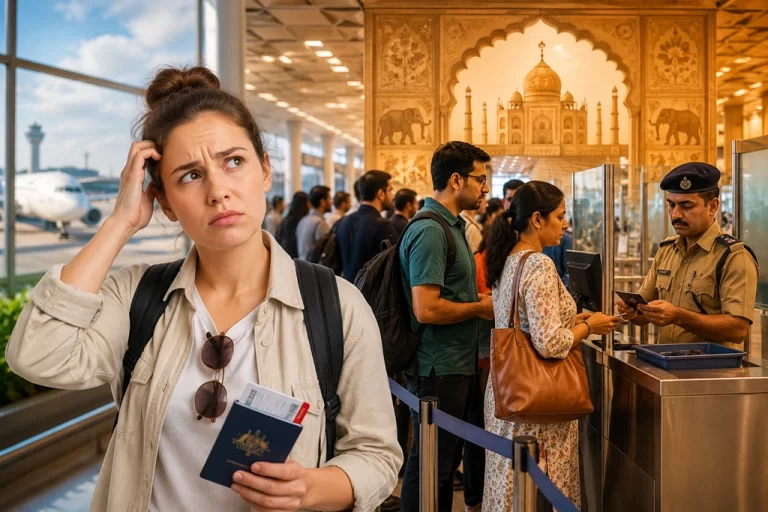
India isn’t one single, uniform arrival experience. A traveller landing in Delhi will move through a very different scale of operation than someone arriving in Amritsar or Chennai, and the small differences in signage, terminal layout and queue length can catch first time visitors off guard. Understanding how airport procedures shift from city to city, and what stays consistent everywhere, is one of the simplest ways to turn a confusing arrival into a smooth one.
This guide walks through what actually happens at immigration, customs and boarding, using current, verified rules rather than outdated advice passed down from someone’s trip a few years ago.
Why Airport Procedures Change From City to City
Scale is the biggest factor. Delhi’s Indira Gandhi International Airport handled 78.1 million passengers in 2025, making it the 11th busiest airport in the world by total traffic, according to Airports Council International rankings reported by Outlook Traveller. That scale changes everything from immigration queue length to how long a domestic transfer realistically takes.
Larger hubs like Delhi and Mumbai tend to have more automated systems and dedicated lanes, while mid sized airports often rely more on manual processing and staff guidance. Neither is better or worse, but knowing which kind of airport you’re arriving into helps you plan connection times sensibly rather than guessing.
What Happens When You Land: Immigration Step by Step
Once you’re off the aircraft, signage will direct you toward immigration and baggage claim. If your journey continues to another country, you’ll follow a separate route for international transfers. Everyone else follows the standard airport procedures for entry into India.
Since October 2025, most international arrivals, including Overseas Citizen of India cardholders, are required to complete India’s e-Arrival Card before or on arrival, in addition to standard visa and immigration checks. It’s a relatively quick step, but it’s easy to overlook if you’re basing your expectations on an older trip.
Immigration counters are typically split by visa category, so check the overhead signage rather than joining the first line you see. Once your passport is stamped, keep it accessible, since it may be checked again before you reach the baggage carousel.
India Airport Customs Rules Every Traveller Should Know
After collecting your luggage, you’ll pass through customs, and this is where the India airport customs rules matter most. Every arriving passenger chooses between two channels: green, for those with nothing to declare, and red, for anyone carrying goods or currency above the permitted thresholds.
As of February 2026, under India’s revised Baggage Rules, the general duty free allowance for returning residents, NRIs and OCI cardholders rose from Rs 50,000 to Rs 75,000, while foreign tourists on a tourist visa have a separate allowance of Rs 25,000. These figures are confirmed by the Central Board of Indirect Taxes and Customs, India’s official customs authority, and cover new, unused goods such as electronics and gifts rather than used personal belongings, which are generally exempt.
Currency rules sit alongside the goods allowance as a separate part of the India airport customs rules framework. If you’re carrying foreign currency notes above USD 5,000, or a combined total of cash and traveller’s cheques above USD 10,000, you’re required to declare it on a Currency Declaration Form at arrival. Choosing the green channel while carrying more than these limits is treated as a customs offence in its own right, so it’s worth checking your totals honestly before you walk through.
Boarding Procedures at the Airport for Your Return or Onward Flight
The boarding procedures at the airport look a little different depending on whether you’re departing internationally or connecting onward within India. For an international departure, expect standard check in, security screening and immigration exit checks, generally with signage directing you well ahead of time.
If your trip includes a domestic connection inside India, you’ll usually need to collect your checked luggage after arrival, clear customs, and recheck your bags at the domestic check in counter before going through security again for the next leg. Some regional carriers use a separate terminal from the main international one at certain airports, which can mean an additional transfer by shuttle or taxi rather than a simple walk between gates.
This is exactly the kind of detail that’s easy to miss when flights are booked separately rather than as one connected itinerary, and it’s one of the more common reasons travellers get caught out by unexpected baggage fees or tight connection windows. A travel advisor who works with this route regularly can flag these gaps before you fly, rather than you discovering them at the transfer counter.
How Airport Procedures Differ Across Major Indian Cities
Airport | Scale | What to Expect |
Delhi (DEL) | Very high traffic, 78.1 million passengers in 2025 | Long walking distances between terminals, allow extra time for domestic transfers |
Mumbai (BOM) | High traffic, major western gateway | Generally efficient, but can be busy during peak evening arrivals |
Bengaluru (BLR) | Modern, high traffic | Streamlined processing, relatively short transfer times |
Chennai (MAA) | Combined international and domestic terminal | Straightforward layout, though busy during festival periods |
Amritsar (ATQ) | Smaller regional hub, strong Punjab connectivity | Less crowded, though fewer amenities and slower processing at peak times |
Layouts and terminal assignments can shift over time as airports expand, so it’s worth confirming the specifics for your exact route closer to your travel date rather than relying on an old itinerary.
Documents and Money: What to Have Ready Before You Land
A few practical things make the first hour after arrival smoother. Australian passport holders need a valid Indian visa or e-Visa, along with a passport valid for at least six months. Keep a printed copy of your visa, accommodation address, and travel insurance details accessible, since immigration officers may ask for them directly.
Carrying a small amount of cash for the first taxi ride or a meal, either exchanged before departure or withdrawn from an airport ATM, is worth doing since airport WiFi in India commonly requires an Indian mobile number to receive a login code. You can rely on our travel experts for current entry requirements and dedicated travel advisories.
Final Thoughts
Airport procedures in India follow the same basic shape everywhere: immigration, customs, and boarding, but the pace, layout and level of automation genuinely change depending on where you land. Knowing that in advance is what separates a stressful arrival from a straightforward one.
If your itinerary involves a domestic connection, a tight layover, or a family group travelling together, it’s worth talking to a specialist before you book. A good travel advisor who understands this route can keep the airport side of things simple, leaving you to focus on what actually matters, seeing your family again.
FAQs
Do airport procedures really differ between Indian cities?
Yes. Larger airports like Delhi and Mumbai handle far higher passenger volumes and tend to be more automated, while smaller airports rely more on manual processing. The core steps stay the same, but the pace and layout vary.
What are the current India airport customs rules for duty free goods?
NRIs and OCI cardholders have a duty free allowance of Rs 75,000, while foreign tourists have a Rs 25,000 allowance. Amounts above this need to be declared through the red channel.
Do I need to declare cash when I arrive in India?
Foreign currency cash above USD 5,000, or a combined total with traveller’s cheques above USD 10,000, must be declared on a Currency Declaration Form.
What are the typical boarding procedures at the airport for a domestic connection in India?
You’ll generally need to collect your luggage, clear customs, and recheck bags at the domestic counter before security again, particularly if your flights weren’t booked on a single itinerary.
Do I need a visa to go through immigration as an Australian traveller?
Yes, a valid Indian visa or e-Visa, along with a passport valid for at least six months from your date of travel.
Is Delhi's airport busier than other Indian airports?
Yes, considerably. Delhi’s Indira Gandhi International Airport handled 78.1 million passengers in 2025, the busiest in India by a wide margin and one of the busiest in the world.

